


Properly marked car parks are not only essential for organisation and accessibility but also for compliance with safety regulations. Adhering to car park line marking standards ensures that your property meets legal requirements while providing a safe and user-friendly environment for drivers and pedestrians. In Australia, standards such as AS 2890.1 outline specific guidelines for car park design, including dimensions, colors, and signage. In this guide, we’ll explore the importance of these standards, key requirements, and how to ensure compliance in your car park line marking project.
Why Are Car Park Line Marking Standards Important?
Compliance with car park line marking standards is crucial for several reasons:
- Safety: Clear and standardised markings reduce accidents by guiding vehicles and pedestrians effectively.
- Accessibility: Compliant disabled parking zones and pathways cater to all users, including those with mobility challenges.
- Efficiency: Organised layouts streamline traffic flow and minimise congestion.
- Legal Protection: Adherence to standards protects property owners from liability in case of accidents or disputes.
- Professional Appearance: Standardised markings enhance the overall look and credibility of your property.
What Are the Key Requirements of Car Park Line Marking Standards?
Australian Standards (AS 2890.1) provide detailed guidelines for car park design and line marking. Here are the key requirements:
- Parking Bay Dimensions:
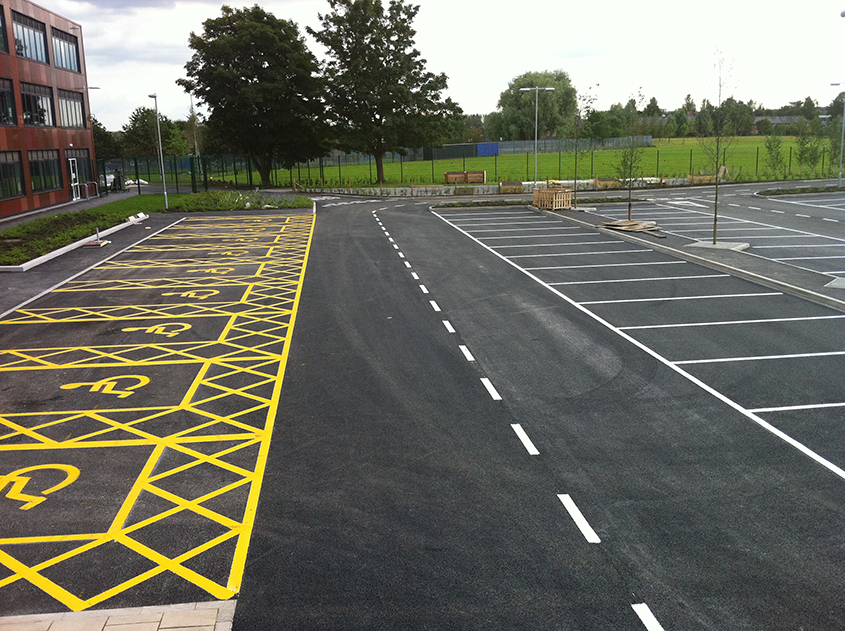
- Standard car spaces should measure at least 2.4 meters wide and 5.4 meters long.
- Disabled parking bays must be wider (minimum 3.6 meters) and include an adjacent access aisle.
- Line Colors and Visibility:
- White lines are typically used for general markings, while yellow indicates restricted zones.
- High-visibility paints ensure markings remain clear even in low-light conditions.
- Directional Arrows:
- Clearly indicate the flow of traffic to prevent confusion and improve navigation.
- Pedestrian Crossings:
- Highlight safe crossing points with bold, contrasting markings.
- Signage:
- Include clear signs for parking restrictions, disabled zones, and no-stopping areas.
What Materials Meet Car Park Line Marking Standards?
Using compliant materials ensures durability and visibility, meeting both functional and regulatory requirements. Here are the most common options:
- Thermoplastic Paint:
- Durable and reflective, ideal for high-traffic areas.
- Meets standards for longevity and visibility.
- Epoxy Coatings:
- Bonds strongly to surfaces, offering excellent resistance to wear and tear.
- Suitable for indoor or covered car parks.
- Cold Plastic Resin:
- Flexible and long-lasting, perfect for outdoor applications.
- Provides superior adhesion and compliance with safety standards.
- Water-Based Paint:
- Eco-friendly option, though less durable than other materials.
- Best suited for temporary or low-traffic areas.
How Can You Ensure Compliance with Car Park Line Marking Standards?
Achieving compliance requires careful planning and execution. Follow these steps:
- Review Regulations: Familiarise yourself with AS 2890.1 and any local council guidelines applicable to your area.
- Work with Professionals: Hire experienced contractors who understand and adhere to car park line marking standards.
- Design the Layout: Plan the layout, including parking bays, directional arrows, and pedestrian pathways, to meet dimensional and visibility requirements.
- Inspect the Surface: Ensure the car park surface is clean, dry, and free of cracks or damage before marking begins.
- Conduct Post-Installation Checks: Verify that all markings align with standards and address any discrepancies immediately.
Where Can You Find Resources for Car Park Line Marking Standards?
Accessing reliable resources ensures your project meets all necessary requirements. Here are some options:
- Standards Australia: Purchase or review AS 2890.1 for detailed guidelines on car park design and line marking.
- Local Councils: Consult councils for specific regulations and recommendations related to car park safety.
- Industry Associations: Organisations like the Australian Parking Industry Association (APIA) provide valuable insights.
- Professional Contractors: Work with line marking specialists who are well-versed in compliance and standards.
- Online Guides: Explore government or industry websites for summaries and checklists related to car park safety.
Conclusion
Car park line marking standards are essential for creating safe, accessible, and compliant parking spaces. By adhering to guidelines such as AS 2890.1, you can ensure your car park meets legal requirements while enhancing user experience and safety. Whether you’re designing a new facility or updating an existing one, compliance with standards delivers peace of mind and long-term benefits. So take the initiative—partner with a trusted contractor today and create a car park that’s functional, professional, and fully compliant!