


Fire rated paint plays a crucial role in building design and construction by helping materials resist the damaging effects of high heat. Applied like a standard coating, this special type of paint is engineered to protect structural elements from fire damage, often for defined timeframes like 30 or 60 minutes. As building safety codes become more rigorous, understanding how this paint functions and where it’s best used is increasingly vital.
What makes paint ‘fire rated’?
- Heat response: Fire rated paint either insulates or expands when exposed to heat, delaying temperature transfer to the material beneath.
- Intumescent or ablative types: Some paints expand to create a protective layer, while others slowly erode and absorb heat through chemical reactions.
- Certified testing: Products are tested under controlled fire conditions to earn time ratings that indicate how long they can protect a structure.
- Defined performance metrics: Ratings usually refer to a period—like 60 or 90 minutes—during which the underlying material retains its strength.
- Passive fire protection: Unlike alarms or sprinklers, fire rated coatings work without sensors or electricity, offering built-in resilience.
Which materials benefit from fire rated paint?
- Structural steel: This metal loses strength rapidly in fire. Coatings extend the time before it softens or deforms.
- Timber framing: Especially in multi-storey housing, fire rated paint slows combustion and maintains structural integrity longer.
- Plasterboard: Walls and ceilings treated with specialised coatings offer improved compartmentation and flame resistance.
- Cables and ducting: Some paints help reduce fire spread along electrical or HVAC systems.
- Concrete surfaces: Though naturally fire-resistant, coatings may still be applied for added protection or insulation.
Where is it used in buildings?
- Internal steel beams: Common in commercial offices and apartment blocks, coated steel maintains strength during evacuation times.
- Timber panelling: In public buildings, fire-rated finishes on wood keep designs safe without sacrificing visual warmth.
- Escape routes: Coatings are often required along corridors, stairwells or exits to protect evacuation paths.
- Plant rooms and storage areas: Higher fire risk areas benefit from additional containment using rated finishes.
- Ceiling voids and service risers: These hidden spaces often carry cables or piping and are critical for stopping fire spread.
How is fire rated paint selected?
- Required fire rating: The building design will specify the minimum duration (e.g., 60 minutes) for each component.
- Substrate material: Coatings must match the surface—steel, wood, masonry, etc.—to ensure correct adhesion and function.
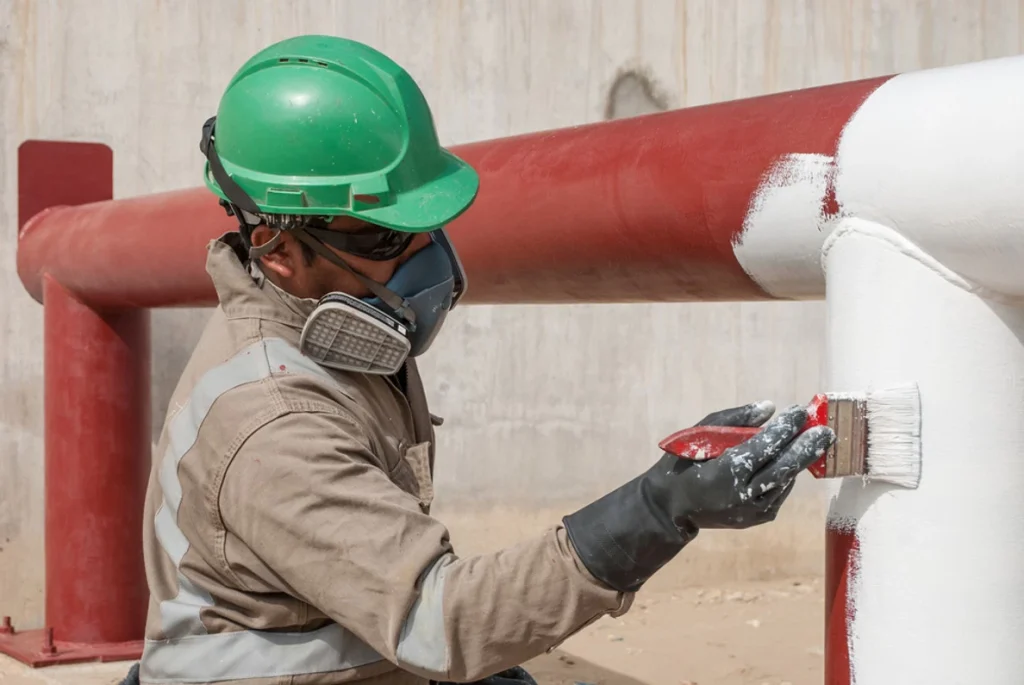
- Application method: Some paints require professional spray equipment, while others are suitable for brush or roller.
- Environmental conditions: Indoor vs outdoor use affects product choice due to moisture, UV and wear.
- Finish quality: Decorative finishes can often be achieved while still meeting fire protection requirements.
What is involved in correct application?
- Surface cleaning and priming: Substrates must be prepped to promote adhesion. Rust, dust and oil are removed first.
- Layer control: Paint must be applied in defined layers, usually measured with film thickness tools to ensure compliance.
- Drying and curing: Conditions like humidity and temperature influence drying times. Adequate curing is essential for full fire resistance.
- Record keeping: Documentation is required to prove correct application and compliance with fire safety design.
- Regular inspection: Paint may need touch-ups or testing after renovations or exposure to wear.
How does it contribute to building compliance?
- Code requirements: Most fire safety codes require passive fire protection in structural elements, which fire rated coatings help satisfy.
- Insurance standards: Proper use of fire rated materials may influence insurance assessments and premiums.
- Construction approvals: Councils and certifiers often ask for product certifications and detailed application records.
- Safety documentation: Building manuals include information about coatings used and their performance ratings.
- Long-term maintenance: Keeping coatings intact is essential, and regular inspections form part of compliance responsibilities.
Conclusion:
Understanding the role of fire rated paint is essential for anyone involved in design, construction or building maintenance. This coating plays a passive but critical role in slowing the spread of fire and supporting structural stability during emergencies. With correct application, proper product selection and attention to compliance, fire rated coatings contribute significantly to the safety and resilience of modern buildings.