


Finding an affordable battery that delivers reliable power is important for camping, caravans, boating and off-grid applications. With several options available, choosing the right one requires more than comparing prices. A best budget lithium deep cycle battery should offer suitable storage capacity, dependable performance and essential safety features without exceeding your budget. Understanding the key specifications can help buyers make a practical choice for their everyday power requirements.
Why Choose a Lithium Deep Cycle Battery?
Lithium deep cycle batteries are designed to provide consistent power over extended periods and can be recharged repeatedly. Compared with traditional lead-acid batteries, they offer several advantages:
- Lightweight construction: Easier to transport and install in caravans, boats and recreational vehicles.
- Usable capacity: Provides access to a greater proportion of stored energy.
- Faster charging: Can recharge more quickly when paired with compatible charging equipment.
- Low maintenance: Generally requires less routine maintenance than traditional battery types.
- Longer cycle life: Can support many charge and discharge cycles when properly maintained.
What to Consider When Buying a Budget Lithium Battery
An affordable battery should still meet essential performance and safety requirements. Consider these factors before making a purchase.
1. Battery Capacity
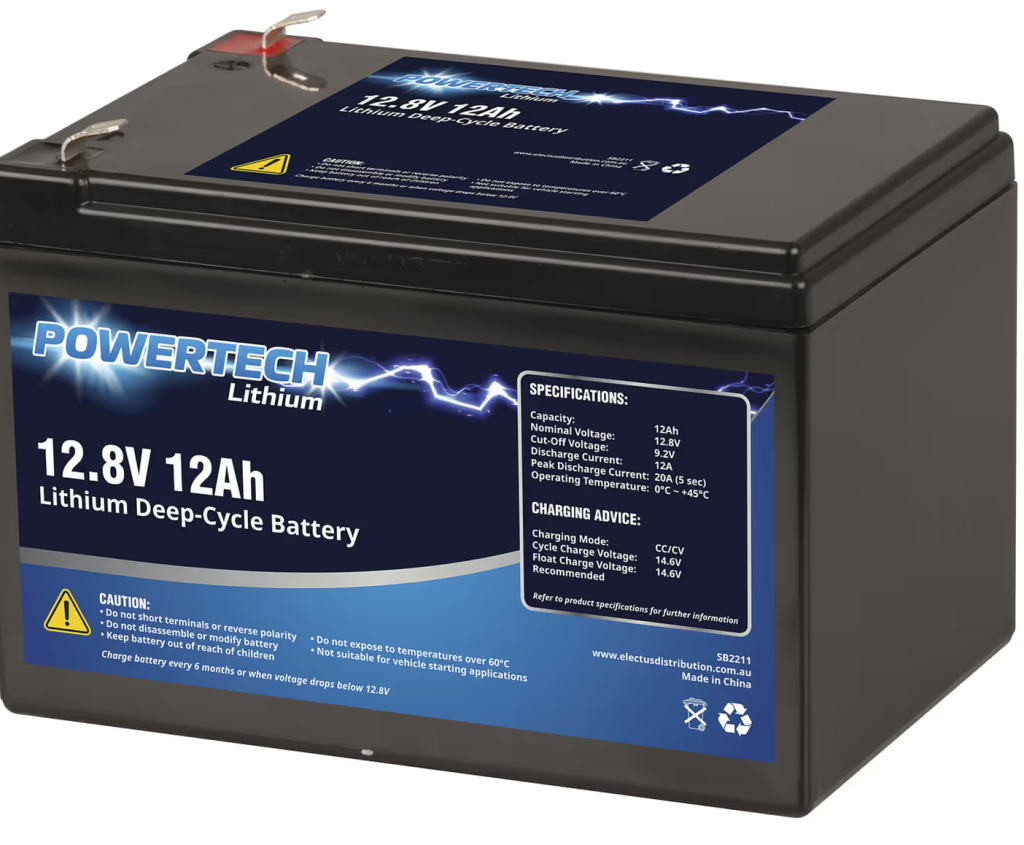
Capacity is measured in amp-hours (Ah) and indicates how much electrical charge a battery can store. A 100Ah battery may suit basic camping equipment, lighting and smaller appliances, while higher-capacity options may be necessary for refrigerators, inverters and extended off-grid use.
2. Battery Management System
A Battery Management System (BMS) is an important safety component. It helps protect the battery against overcharging, excessive discharge, overcurrent and temperature-related issues.
3. Battery Chemistry
Lithium Iron Phosphate (LiFePO4) is commonly used in deep cycle applications. It is valued for its thermal stability, durability and suitability for repeated charging cycles.
4. Charging Compatibility
Check whether your existing charger, solar controller or DC-DC charger supports lithium batteries. Using compatible charging equipment helps maintain battery performance and safety.
5. Warranty and Cycle Life
Compare warranty conditions and the manufacturer’s stated cycle life. Also, check the conditions under which cycle-life figures are measured, including depth of discharge.
Finding the Best Budget Lithium Deep Cycle Battery for Your Needs
The right battery depends on how and where it will be used.
- Camping: A compact 100Ah battery may provide sufficient power for basic electrical equipment.
- Caravans: Consider higher capacity if you regularly operate refrigerators, lighting and other appliances.
- Boating: Look for suitable vibration resistance, secure installation and marine-use compatibility.
- Off-grid systems: Evaluate daily energy consumption and consider a larger battery bank for extended power requirements.
When comparing the best budget lithium deep cycle battery options, prioritise usable capacity, continuous discharge rating, safety protection and warranty rather than choosing solely based on the lowest price.
How to Get Better Value for Your Money
Before purchasing, calculate your daily power consumption and determine how long you need the battery to operate without recharging. Compare batteries with similar capacities and specifications to understand their actual value.
It is also worth considering installation requirements, additional wiring, battery monitoring equipment and charging accessories when planning your budget.
Make a Smart Battery Investment
An affordable lithium deep cycle battery can be a practical solution for recreational and off-grid power needs. By comparing capacity, battery chemistry, BMS protection, charging compatibility and warranty coverage, buyers can find an option that balances affordability with dependable performance. Choosing the right specifications from the beginning can help avoid unnecessary expenses and provide a suitable power solution for the long term.