




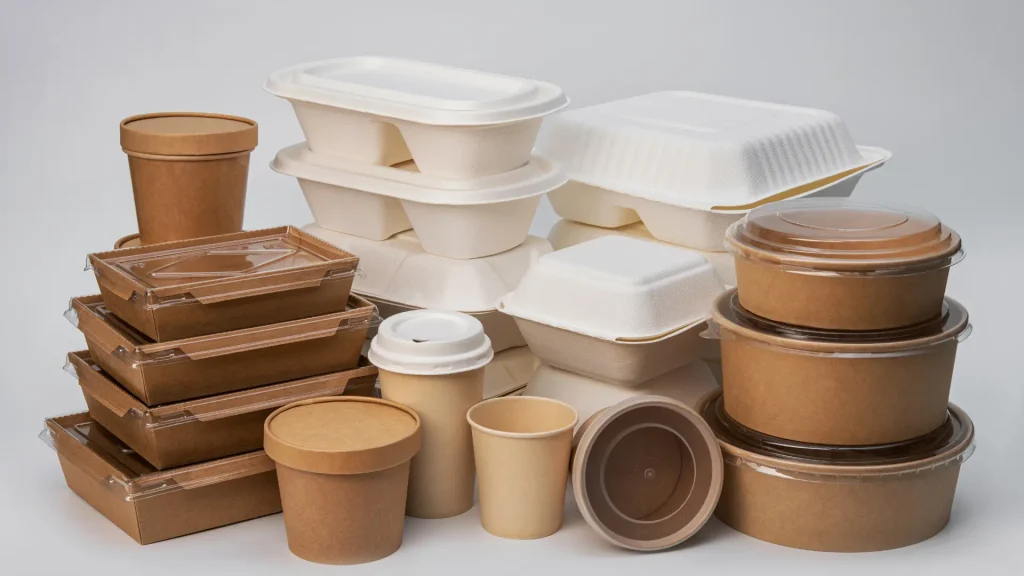
Sustainable food packaging plays a vital role in reducing the environmental footprint of the global food industry. As concerns around plastic pollution, landfill waste, and resource depletion grow, businesses and consumers alike are seeking packaging alternatives that prioritise ecological responsibility without compromising safety or functionality.
The aim of sustainable food packaging is to preserve food effectively while using materials and processes that minimise harm to the planet. This includes compostable wraps, recyclable containers, and renewable or biodegradable materials. Understanding the components and benefits of sustainable packaging helps support more responsible production and consumption practices.
What Defines Packaging as Sustainable?
- Environmentally Friendly Materials
Sustainable food packaging often incorporates renewable, recyclable, or biodegradable materials such as paperboard, plant-based plastics, or moulded fibre. - Reduced Resource Usage
These packaging types are designed to use fewer raw materials, less water, and lower energy during production compared to conventional plastic or foil packs. - Designed for End-of-Life Recovery
Proper sustainable packaging must be recyclable, compostable, or reusable, ensuring it fits within a circular waste model rather than ending in landfill. - Low Emissions Manufacturing
Manufacturing techniques often aim to reduce carbon emissions, chemical use, and environmental degradation during processing.
What Are the Benefits of Using Sustainable Food Packaging?
- Waste Reduction
Compostable or recyclable materials reduce the volume of packaging ending up in landfills, contributing to better waste management outcomes. - Lower Carbon Footprint
Lightweight, minimal packaging uses less energy in transport and production, helping to reduce emissions throughout the supply chain. - Support for Circular Economy
Sustainable packaging is often designed to be part of a closed-loop system, allowing materials to be reused or repurposed after initial use. - Enhanced Consumer Trust
Eco-conscious consumers favour products that demonstrate environmental awareness, often resulting in improved brand perception and loyalty.
What Materials Are Common in Sustainable Packaging?
- Plant-Based Plastics
Made from sources like cornstarch or sugarcane, these plastics degrade more easily and avoid fossil fuel-based inputs. - Recycled Paper and Cardboard
Paper-based packaging offers high recyclability and is suitable for dry food items, take-away containers, or outer wrapping. - Biodegradable Films
These clear films protect food while breaking down naturally after disposal under the right composting conditions. - Glass and Metal Alternatives
Although heavier, glass and metal containers can be reused or recycled endlessly without loss of quality.
How Is Packaging Tested for Sustainability?
- Compostability Standards
Packaging must meet set composting standards, such as degrading within specific timeframes and leaving no harmful residue in soil. - Recyclability Checks
Materials are tested for compatibility with standard recycling systems. Contaminants like mixed layers or non-removable inks are avoided. - Life Cycle Assessments
A complete analysis of the environmental impact from raw material sourcing to disposal helps validate whether the packaging is truly sustainable. - Certifications and Labelling
Many sustainable packaging types carry labels confirming their eco-credentials, including information on how to dispose of them responsibly.
What Are the Challenges of Switching to Sustainable Packaging?
- Higher Production Costs
Biodegradable and recyclable materials may cost more than conventional plastics due to sourcing, processing, and certification requirements. - Limited Infrastructure
In many regions, composting or specialised recycling systems are still underdeveloped, which can reduce the effectiveness of sustainable options. - Shelf Life and Product Protection
Some eco-packaging may offer less moisture or oxygen resistance, which affects its suitability for perishable items unless combined with barrier layers. - Consumer Disposal Behaviour
Even with sustainable packaging, if consumers do not dispose of it correctly, the environmental benefits can be lost. Clear labelling is essential.
What Innovations Are Emerging in Sustainable Food Packaging?
- Edible Packaging
Designed to be eaten alongside food, these materials eliminate waste altogether and are suited for snacks, condiments, or small portions. - Mono-Material Solutions
Packaging made from a single material type is easier to recycle and is gaining popularity across various food segments. - Smart Compostable Films
These films adjust to environmental conditions, speeding up the breakdown process and ensuring full decomposition within industrial composting systems. - Algae and Seaweed-Based Wraps
Biodegradable and marine-safe, these materials are gaining attention as truly zero-waste options for short-life food packaging.
Conclusion
Sustainable food packaging represents a significant shift towards reducing the environmental burden of modern food systems. By focusing on renewability, recyclability, and responsible disposal, these packaging solutions address key ecological challenges while maintaining food safety and convenience. As technologies and materials continue to evolve, sustainable packaging stands as a practical and necessary step in achieving more environmentally conscious consumption patterns.