


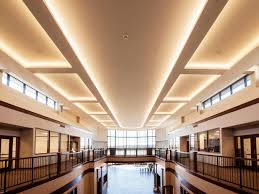
Ceilings greatly help in defining the character and functionality of any space. Suspended drywall ceilings have gained immense popularity in residential and commercial settings due to their versatility, aesthetics, and practicality. If you’re trying to enhance your interior spaces, then this course will highlight the key benefits and applications that come along with suspended drywall ceilings to make an informed decision.
What is a Suspended Drywall Ceiling?
A suspended drywall ceiling refers to the ceiling system whereby drywall, commonly known as gypsum board, is nailed onto a grid that is, in turn, hung from the structural ceiling above. This sets up a false ceiling, with space in between the drywall and the original ceiling. The suspended system allows access to utilities such as wiring, plumbing, and HVAC systems with ease, making it one of the most practical options for many applications.
Advantages of Suspended Drywall Ceilings Aesthetic Appeal
Suspended drywall ceilings offer a neat, unobtrusive appearance that further enhances the beauty of any room. In contrast with most conventional drop ceilings, which often bear unsightly grids, suspended drywall systems feature a smooth, unbroken surface that can be treated in an infinite variety of textures and colours to meet every possible design taste. Among the acoustic benefits, it includes the fact that the space between the drywall and the structural ceiling is used for sound-absorbing materials to help dampen noise transmission, thus resulting in a more comfortable and quieter environment. Of special relevance are offices, classrooms, and home theatres.
Fire Resistance Gypsum board is the main material constituent in suspended drywall ceilings, and by nature, it is fire-resistant. These ceilings, when properly installed, may offer an added layer of protection in case of a fire, which would slow the movement of flames and thereby give occupants more time to evacuate during an emergency.
Key Considerations for Installation
One of the most critical aspects to be taken into consideration in the design process of the suspended drywall ceiling is the load-carrying capacity. It simply means the grid should be sufficiently strong enough to support the weight of drywall panels and, if appropriate, other materials such as insulation or lighting fixtures. A structural engineer or professional installer can help you ensure that a ceiling has been installed safely and securely.
Utilities: The suspended ceiling facilitates hiding of utilities and their access. However, this needs to be well planned to ensure that all access points are accommodated. One may need to design access panels or hatches for easy maintenance and repairs.
Incorporing Lighting: Suspended drywall ceilings have perfect avenues for light incorporation. Recessed lighting is particularly popular with this ceiling type due to its modern and sleek look that does not interfere with the smooth surface of the ceiling. One needs to integrate an electrician during the planning stage for the layout of the light and installation of all the fixtures.
Maintenance and Durability
Durability: Suspended drywall ceiling installation has the accreditation of durability. The materials applied are totally resistant to moisture, mould, and mildew; hence, the drywall ceilings can act appropriately for places that involve high humidity, like bathrooms or basements. Besides, repairs can easily be carried out on the ceiling when there is damage, as single panels can be replaced without tampering with the whole system.
Ease of maintenance: In most suspended drywall ceilings, the routine maintenance required is very minimal, essentially confined to cleaning and sometimes visual checking so that the grid system doesn’t break down. Any repairs or updates concerning utilities are also readily managed through access design in the ceiling.
Conclusion
Suspended drywall ceilings offer a blend of aesthetic appeal, acoustic benefits, and functionality in a broad range of applications, making it ideal for a host of usages. Whether it is to add beauty to a room or enhance the acoustics, provide easy access to utilities, or whatever other needs you might have, a suspended drywall ceiling offers versatility and durability. From careful planning of installation to considering the load-bearing aspect to integrating lighting, one can come up with a ceiling that is not only good to look at but meets practical ends.